

New Mexico Product Liability Lawyers
Keller & Keller Injury Lawyers’ Winning Approach
Free Case EvaluationInjured by a Defective Product?
Get started with a free case evaluation. No Fee Until We Win.
100% Free Evaluation
Provide a few details and our team will handle the rest.
"*" indicates required fields

“As a busy mom of three, I’m so grateful I didn’t have to face the legal battle alone. Thank you, Keller & Keller Injury Lawyers.”
Kelly


When you’ve been injured by a dangerous or defective product, you need more than just legal representation. You need a battle-tested sword and shield fighting for your rights.
has been maximizing client settlements and delivering justice since 1936, establishing our firm as one of New Mexico’s leading personal injury law firms. With over 90 years of experience taking on major manufacturers and corporations, we’ve recovered millions of dollars for our clients injured by defective products. Every year, thousands of New Mexicans suffer injuries from products that should never have made it to store shelves, faulty machinery, dangerous drugs, defective vehicles, and unsafe consumer goods. With our Albuquerque office serving clients throughout New Mexico, and additional offices in Indiana and Michigan, our New Mexico product liability lawyers bring the same dedication and expertise to every case we handle.
Why You Need a New Mexico Product Liability Lawyer After Being Injured
The aftermath of a product-related injury can turn your life upside down in an instant. Medical bills pile up, manufacturers deny responsibility, and you’re left wondering how a product you trusted could cause such harm while you’re still recovering from your injuries.

Navigating Complex Legal Claims

Understanding Insurance Company Tactics

Understanding Statute of Limitations
Navigating Complex
Legal Claims
Product liability cases are among the most complex in personal injury law. These cases involve detailed technical evidence, expert testimony about product design and manufacturing, and fights against corporations with unlimited legal resources. Establishing whether a product was defectively designed, improperly manufactured, or sold without adequate warnings requires specialized knowledge. In New Mexico, product liability claims can be based on strict liability, negligence, or breach of warranty, each requiring different proof. Without proper legal representation, you risk making costly mistakes that could result in your claim being denied entirely. Our New Mexico product liability lawyers understand these complexities and can effectively navigate them on your behalf.

Understanding Insurance Company Tactics
Major manufacturers have legal departments specifically designed to minimize liability and protect corporate profits. They’ll hire expert witnesses to dispute your claims, argue that you misused the product, or claim your injuries came from something else entirely. At Keller & Keller, we’ve seen every defense tactic in the corporate playbook. Our product liability lawyers have decades of experience dealing with major corporations and their insurance carriers, and we know exactly how to counter their strategies to protect your interests.

Understanding Statute of Limitations
Time is critical after a product injury. New Mexico has strict deadlines for filing product liability claims, generally three years from the date of injury. However, the discovery rule may extend this deadline in cases where the injury wasn’t immediately apparent, such as with dangerous drugs or toxic exposure. Missing these deadlines means forfeiting your right to compensation permanently. Our product liability lawyers ensure all paperwork is filed correctly and on time, preserving your right to seek the justice and compensation you deserve.

What to Do After a Product Injury
Taking the right steps after being injured by a defective product can protect both your health and your legal claim.
See What Your Case Is WorthGet treatment and create documentation linking your injuries to the product.
Do not throw away, repair, or alter the defective product. It’s crucial evidence.
Save all boxes, labels, manuals, and warning materials.
Photograph your injuries and the product from multiple angles.
Save purchase receipts and any warranty information.
File reports with appropriate agencies like the Consumer Product Safety Commission.
Collect contact information from anyone who saw the incident.
Keep all documentation of treatment and ongoing care.
Early legal representation helps preserve evidence, identify all responsible parties, and prevent manufacturer tactics.

The Keller & Keller Injury Lawyers Approach:
New Mexico Injury Lawyers Who Fight to Win
From the moment you contact us, you’ll notice the difference in our approach. Our client-first philosophy means we take the time to understand not just the details of your accident but how it has affected your life, your work, your family, and your future in New Mexico. We clearly communicate every step of the process in plain language you can understand, no confusing legal jargon. This approach has earned us countless 5-star reviews from real New Mexico clients who’ve experienced the Keller & Keller difference firsthand.
We understand that being injured in an accident is stressful enough without having to chase down your lawyer for updates. That’s why we’ve built our practice around transparent, consistent communication.
When you hire us, you’ll have direct access to the New Mexico-based attorney handling your case as well as a dedicated paralegal who monitors its daily status. We keep you informed throughout every stage of your claim, explaining what’s happening, what to expect next, and how it affects your case.
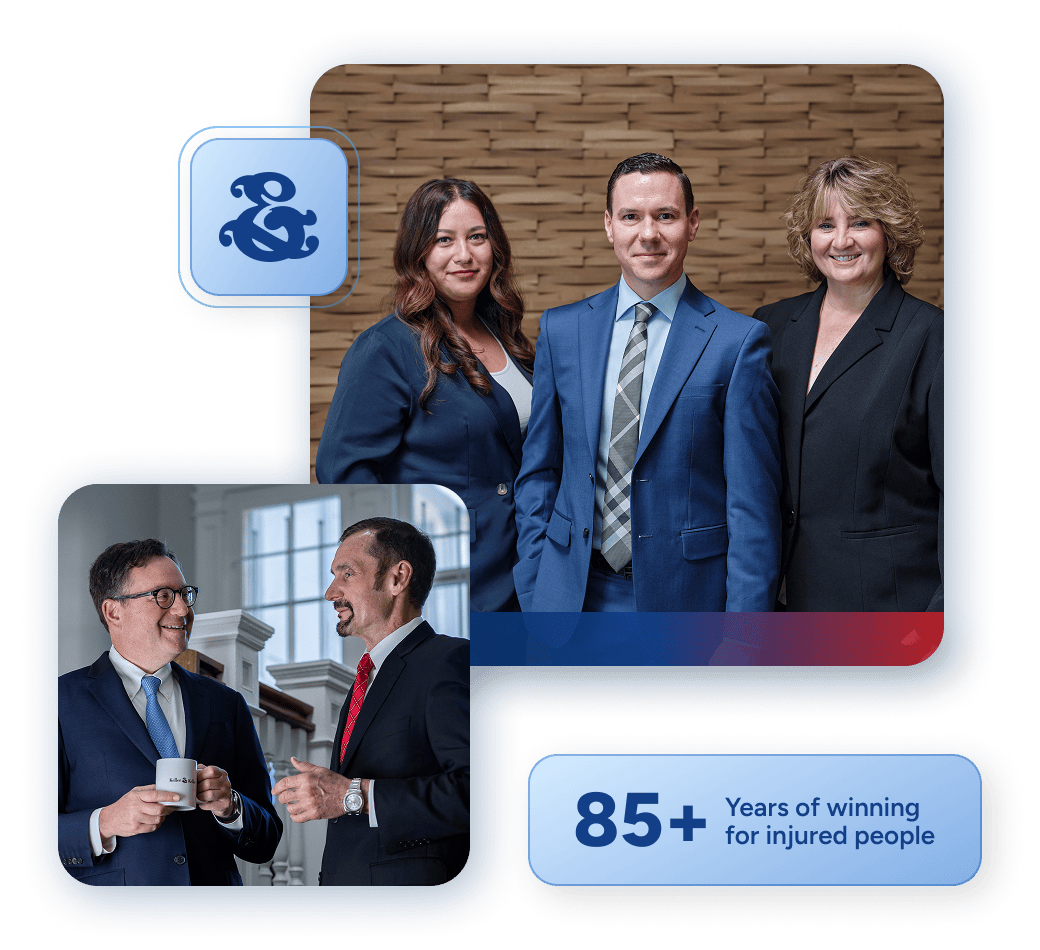
Our 90+ years of experience isn’t just about longevity. It’s about results. Our attorneys have successfully handled thousands of cases in New Mexico and recovered millions and millions of dollars for our clients. We’ve gone toe-to-toe with the biggest insurance companies and won. Our courtroom experience means we’re always prepared to take your case to trial if that’s what it takes to secure fair compensation. This willingness to fight, and our track record of success, often motivates insurance companies to offer better settlements to avoid facing us in court.
The Product Liability Claim Process with Keller & Keller Injury Lawyers
When you choose our firm to handle your New Mexico product liability claim, you can expect a clear, structured process designed to maximize your compensation while minimizing your stress.
Types of Product Liability Cases We Handle
Our extensive experience covers all types of defective product cases throughout New Mexico, each with unique challenges and considerations.
Hip replacements, pacemakers, surgical mesh and other implanted devices can fail or cause complications, often requiring additional surgeries and long-term medical care. A defective device case asks whether the product itself was unreasonably dangerous, or came without an adequate warning. Our defective drug and device page covers specific products and the Food and Drug Administration (FDA) record on each.
Cleared or Approved? Two Words That Change a Case
Patients often hear that a device was FDA approved, but that may not be accurate. A 510(k) is a premarket submission showing a device is substantially equivalent to one already legally on the market, and the FDA clears those devices. Premarket approval (PMA) is the agency’s most stringent device application, used for Class III devices and based on valid scientific evidence of safety and effectiveness.
The difference matters because federal law can bar some state claims over PMA devices, under Riegel v. Medtronic (2008). Claims over 510(k) devices have fared differently, as Medtronic v. Lohr (1996) shows. Which side of that line your device sits on is one of the first things to pin down.
Can the Hospital That Supplied the Implant Be Strictly Liable?
Ordinarily, any entity in the business of selling or otherwise distributing products is strictly liable for distributing a defective product (Parker v. St. Vincent Hospital, 1996-NMCA-070). Patients sometimes assume that covers the hospital where the device was implanted. Parker went the other way on its facts, holding a hospital not strictly liable for a design defect in implants.
That ruling is narrow, though. The same opinion rejected the view that hospitals are never distributors. In plain terms, a hospital isn’t automatically in or out of the chain of distribution, and the answer may depend on the facts and the kind of defect claimed.
Where the Real Cost of a Failed Implant Shows Up
A device claim differs from many injury cases because the harm may keep unfolding after the first surgery. Replacement operations, ongoing monitoring and lost work can continue for years, and those future needs are often the largest part of what must be proved. Useful records may include:
- Implant identification. The device’s model and lot number tie the claim to a specific product.
- The removed device. If a device is taken out, what happens to it afterward can affect the evidence.
- Treating doctors’ opinions. A physician’s view of why a device failed, and what care lies ahead, may support both fault and damages.
- Cost records. Bills and future care estimates can help show the full reach of the harm.
If your concern is how a surgeon or hospital delivered your care, rather than the device itself, see our medical malpractice page.
These cases involve prescription drugs with undisclosed side effects, dangerous drug interactions or inadequate warnings that can cause serious health complications or death. In most of them, the core complaint is about information: what the maker knew, and what it told the people relying on it. For specific named drugs, see our defective drug and device page.
Three Ways a Drug’s Warnings Can Fall Short
- Undisclosed side effects. A risk the maker knew or should have known about was left off the label or understated.
- Dangerous interactions. A label may not address what happens when the drug is taken with another common medication.
- Inadequate warnings. A risk is mentioned, but the wording, placement or emphasis doesn’t convey how serious it is.
A supplier must use ordinary care to warn of a risk it knows or should know of, and in New Mexico a product without an adequate warning of an avoidable risk can be defective (UJI 13-1415 NMRA). There is generally no duty to warn of risks that are obvious or already known to foreseeable users.
Who Is the Warning Actually For?
A prescription drug reaches you through a doctor, and New Mexico law reflects that. A drug maker’s duty is to warn the medical profession of the dangers of its drugs, and it is liable to a patient injured when it breaches that duty (Richards v. Upjohn Co., 1980-NMCA-062). The focus is therefore on the information sent to prescribers.
Warning adequacy can also be decided by a judge. In Serna v. Roche Laboratories, 1984-NMCA-078, a court upheld summary judgment for the maker because its warnings to physicians were adequate. Summary judgment means the case ended without a trial, so the actual text of the warning deserves close study from the start.
Does It Matter Whether You Took a Generic?
It can matter a great deal. In Wyeth v. Levine (2009), the US Supreme Court held that federal law did not pre-empt a claim that a brand-name drug’s label lacked an adequate warning. In PLIVA v. Mensing (2011), it held failure-to-warn claims against generic makers pre-empted, because federal law required their labels to match the brand-name label.
In practical terms, pharmacy records showing exactly what you received can decide whether a warning claim is available at all. Not every drug warning claim is viable, and the type of reaction matters too. Serious reactions such as Stevens-Johnson syndrome can raise questions about which medication was responsible, particularly when a patient was taking several. If a dangerous drug took a loved one’s life, see our wrongful death page.
Cars, trucks and motorcycles can have design flaws affecting brakes, steering, airbags or fuel systems that lead to crashes and serious injuries. These claims target the vehicle or part rather than another driver. Sometimes the defect caused the crash, and sometimes a part such as an airbag failed during it.
What a Recall Does and Doesn’t Tell You
A vehicle or equipment manufacturer that learns of a defect, and decides in good faith that it relates to motor vehicle safety, must notify the National Highway Traffic Safety Administration (NHTSA) as well as owners, purchasers and dealers (49 USC 30118, 30119). NHTSA can also order notice and a remedy after its own decision.
Manufacturers generally must fix a safety defect without charge, through repair, replacement or refund (49 USC 30120). That duty has limits, including for vehicles bought more than 15 calendar years before notice. A free repair covers the car, though, and it doesn’t pay for an injury. A recall may help show a problem existed, but your vehicle still has to be connected to it, and many defect claims involve no recall at all.
Keep the Car If You Possibly Can
In most crash cases, the vehicle is one piece of evidence among many. In a defect case it may be the central exhibit. Once an insurer totals a car and sells it, a failed part may be gone for good, so moving it to safe storage before anyone repairs or salvages it can matter a great deal.
An inspection may look at the part itself and any maintenance history, along with data such as an Event Data Recorder (EDR). Records of aftermarket work can matter too, since a maker may blame a later modification or a poor repair.
Rental Cars, Dealers and Seat Belts
Strict liability isn’t limited to the factory. Stang v. Hertz Corp., 1972-NMSC-031, held a rental company could face it, in a case where the injured person was a passenger in the rented car. The rule reaches those in the business of selling or leasing a product, including manufacturers, retailers and commercial lessors. A one-time private sale generally falls outside it.
Expect the maker to look for ways to shift blame. Your own negligence may reduce recovery even in a strict liability case, but a missing seat belt is treated differently. New Mexico doesn’t allow an unbuckled belt to count as fault or to reduce damages (NMSA 1978 § 66-7-373). If another driver also caused your crash, see our car accident page.
Industrial equipment, power tools and machinery can lack proper safety guards or have defective parts that cause workplace injuries. A claim here is generally against the company that made or sold the machine, not your employer. That matters in New Mexico, where workers’ compensation usually closes off a lawsuit against the employer but leaves room for a claim against an outside maker.
You Got Hurt at Work. Can You Still Sue Anyone?
For a covered injury, workers’ compensation is generally the exclusive remedy against your employer, its insurer and co-employees (NMSA 1978 § 52-1-6). The Workers’ Compensation Act doesn’t affect a claim against someone else, though, such as an equipment maker (NMSA 1978 § 52-5-17). In plain terms, you may be able to receive benefits and also bring a product claim.
There’s a catch. Accepting compensation assigns your third-party claim to the employer or insurer to the extent of benefits paid, and you can’t recover twice for the same injuries. A portion of any product recovery may therefore go toward reimbursement.
The Missing Guard Question
Guards are where most machine cases begin. Was the machine sold without one, did it come with a poorly designed one, or did someone take it off later? Each answer leads somewhere different.
- Sold without a guard. This may support a design claim. A jury weighs the risks against the benefits, and a product doesn’t have to adopt the ultimate in safety.
- Guard offered as an option. A maker may say the buyer declined it, so purchase records can matter.
- Guard removed on site. The maker may argue that someone else changed the machine after it left the factory.
- Part failed in use. A blade, clutch or switch that broke may point to a manufacturing problem, not a design choice.
A maker may point to safety codes it met. Compliance with regulations or industry standards is relevant, but it isn’t conclusive (Brooks v. Beech Aircraft Corp., 1995-NMSC-043). The reverse is also a live issue, since the warning on a machine and its manual can be as important as the hardware.
Evidence That Tends to Vanish After a Plant Accident
Employers often repair a damaged machine and put it back in service, sometimes within days. Photos taken soon after can show its condition, along with the serial plate and any warning labels. Maintenance logs, the owner’s manual and incident reports may also tell you who touched the machine and when.
The employer may own all of that evidence, and it isn’t a defendant, so written requests can be needed early. Injuries on a building site are covered on our construction site accident page. A worker’s own conduct may come up too, and our guide to comparative negligence in New Mexico explains how shared fault generally works.
Household appliances, furniture, electronics and children’s products can carry dangerous defects or lack adequate safety features. Think of a heater that overheats, a dresser that tips, or a charger that catches fire. New Mexico has no general product liability code, so these claims rest mainly on court decisions and uniform jury instructions.
Three Ways an Everyday Product Can Be Defective
- Design. The whole product line carries the risk, and a jury weighs that risk against the product’s benefits.
- Manufacture. A single unit left the factory different from the rest, perhaps with a loose wire or a cracked part.
- Warning. The product lacks an adequate warning of an avoidable risk, or its instructions don’t explain how to use it safely.
New Mexico asks whether a product posed an unreasonable risk of injury (UJI 13-1407 NMRA). That isn’t the same as asking whether it could have been safer in some way, because a product doesn’t have to adopt the ultimate in safety.
Bought Online, at a Store or at a Yard Sale?
Where the product came from can decide who is answerable for it. Strict liability applies to suppliers in the business of putting a product on the market, including everyone in the chain of distribution (UJI 13-1406 NMRA). Within that chain, it generally doesn’t matter whether the supplier actually made the item.
That’s helpful when an overseas maker is hard to reach, because a store that sold the item may still be in the chain. Casual sellers are different. Your neighbor who sold a crib at a yard sale generally isn’t strictly liable. And in a negligence claim, a seller that didn’t make the product ordinarily has no duty to inspect it.
When the Person Hurt Is a Child
Children’s products raise their own issues. There is generally no duty to warn of risks that are obvious or known to foreseeable users, but a danger obvious to a parent may mean nothing to a toddler. A toy’s intended age range, its packaging and how children actually use such items may all bear on what was foreseeable.
Timing can differ as well. Under the general limitations chapter, minors have one year after the incapacity ends to bring a claim (NMSA 1978 § 37-1-10), though other rules can apply and evidence fades long before then.
Keep the product, its packaging, the receipt and any charger or accessory exactly as they are. Avoid trying it again or sending it back for a refund, since it may be the best evidence you have. An injury journal can also help you record what happened while details are fresh, and our guide to pain and suffering in New Mexico explains how those losses are viewed.
These cases involve products containing dangerous chemicals, asbestos or other toxic materials that can cause illness, cancer or other serious health conditions. Unlike a sudden injury, exposure may build for years with nobody noticing. That delay shapes nearly everything about the claim, from when it can be brought to how it is proved.
When Does the Clock Start on a Slow Illness?
A product injury that doesn’t show up right away is treated differently. The three-year period generally starts when you know, or reasonably should know through diligent inquiry, that you have been injured (NMSA 1978 § 37-1-8, as annotated, citing Martinez v. Showa Denko, K.K., 1998-NMCA-111). Warranty claims have a separate four-year period.
That rule helps people who couldn’t have known, but it isn’t open-ended. An earlier diagnosis or a doctor’s remark about exposure could matter, so the date you first learned of a possible connection deserves careful attention.
Tracing an Exposure Back to a Product
Proving what you were exposed to may be harder than proving you are sick. A claim generally has to connect a specific product to your condition, and your history may involve many products over many years. Sources of proof can include:
- Work history. Job titles, sites and dates can show when and where you handled a product.
- Safety data sheets. The Hazard Communication Standard requires manufacturers or importers to classify chemical hazards, and employers to inform employees through labels, data sheets and training (29 CFR 1910.1200).
- Purchase records. Invoices may show which brand a workplace or household bought.
- Co-workers and family. Their memories may fill gaps where paperwork no longer exists.
- Medical testing. Doctors may be able to say whether a condition fits a known exposure.
Our overview of benzene exposure shows how many ordinary products and jobs can be involved with a single chemical.
What Should the Maker Have Said?
Most toxic product claims turn on warnings. A supplier must warn of a risk it knows or should know of, so internal testing and published science from the time of your exposure may matter. A claim generally looks back to what could have been known then, not what is known today.
Several makers may be involved when exposure came from many sources. Each defendant generally pays only its own share, though those strictly liable for making and selling a defective product remain jointly and severally liable for the portion attributed to them (NMSA 1978 § 41-3A-1). A worker hurt on the job may also have a workers’ compensation claim against the employer, and the maker remains a separate target. For talc and other products tied to medicine or cosmetics, see our defective drug and device page.
Tire failures include blowouts, tread separation and manufacturing defects that can lead to loss of vehicle control and crashes. Long, hot highway runs on I-25 and I-40 put tires under steady stress, so a failure may happen at speed and with little warning. The legal question is why the tire failed: a defect in how it was made, or something that happened to it afterward.
Defect, Wear or Damage?
The defense in nearly every tire case is that the tire wasn’t defective at all. It will usually point to one of a few explanations, and a tire examiner would look for physical signs of each.
- Underinflation. A tire run low can overheat, and that can leave marks on the casing.
- A road hazard. A puncture or impact can damage a tire before it fails.
- Age and wear. Old rubber or thin tread may be blamed for the failure.
- A bad repair. A poorly done plug or patch can shift attention to whoever did the work.
The failed tire is therefore the heart of the case. Keep every piece of it, including strips left on the shoulder, and don’t let a shop or tow yard throw it away.
The 13 Symbols That Identify Your Tire
Each new tire must carry a 13-symbol tire identification number (TIN), and tire makers must provide registration forms to dealers and distributors (49 CFR 574.5, 574.7). Vehicle makers keep records on original tires for at least five years (49 CFR 574.10). That number can identify which product you had, and it may connect the tire to a recall or a production batch.
Federal law also sets reporting duties. The Transportation Recall Enhancement, Accountability and Documentation (TREAD) Act, enacted in 2000, directed early warning reporting rules and added foreign-defect reporting for manufacturers. A maker’s free recall remedy is limited as well, generally excluding tires bought more than five calendar years before notice (49 USC 30120(g)).
More Than One Company May Have Touched That Tire
Depending on the facts, responsibility may reach beyond the tire’s maker:
- The tire manufacturer. Design or manufacturing flaws, along with warnings about tire age or load, may be in question.
- The seller or installer. A business in the chain of distribution may face strict liability, and a careless installation may raise negligence.
- The vehicle maker or dealer. A vehicle sold with a defective original tire may bring them in.
Commercial vehicles raise different questions, which our post on tire blowouts in New Mexico truck crashes discusses. If another driver also contributed to your crash, see our car accident page.
Tractors, combines and other farm machinery can have design flaws or missing safety features that cause severe injuries to agricultural workers. On a working farm, ranch or dairy in New Mexico, that may mean a machine with a moving part left exposed or a tractor that rolls on uneven ground. These claims often differ from factory cases because of how old the machines are and how they change hands.
A Tractor Older Than the Person Driving It
Farm equipment can stay in service for decades, and that creates questions a newer product wouldn’t. Who made it may be easy to answer, but what safety features were available at the time may not be. A jury generally weighs a design’s risks against its benefits, and it may hear about what the design looked like when it was sold.
Age also means repairs and changes. A home-welded hitch or a replaced shield can give a maker room to argue that the machine you were using isn’t the one it sold. Any manual, parts receipts or dealer service history can help show what was original.
Bought at Auction: Does the Seller Answer for It?
Used machinery often moves through dealers, auctions and neighbors, and the law treats those sellers differently.
- An equipment dealer. A business regularly selling or leasing machinery may be a supplier subject to strict liability.
- A farmer selling one old tractor. A casual seller generally falls outside strict liability.
- A rental yard. Commercial lessors can face strict liability, since it reaches those in the business of leasing a product.
- A neighbor who lent the machine. The duty of ordinary care may still apply to an isolated loan, even a free one, under commentary to UJI 13-1402 NMRA.
Are Farm and Ranch Workers Covered by Workers’ Compensation?
Often, yes. The Workers’ Compensation Act still prints a farm and ranch laborer exclusion, but the New Mexico Supreme Court held it unconstitutional in Rodriguez v. Brand West Dairy, 2016-NMSC-029, for injuries manifesting after the court’s mandate. Older statements that farm workers are simply left out may be wrong.
Coverage doesn’t end the product question. A worker’s claim against an equipment maker sits outside the employer’s immunity, because the Act doesn’t affect a claim against someone other than the employer or a co-employee. Even a family member helping out on a small operation may have a product claim, since that depends on the machine and not on an employment relationship.
A maker may also argue about how the machine was being used, and New Mexico’s comparative negligence rule explains how a share of fault generally reduces recovery. For a fatal farm accident, see our wrongful death page.
These cases involve contaminated food that causes illness, products containing undisclosed allergens, and food with dangerous foreign objects inside. New Mexico’s general product rules are the starting point, and those who sell food in the course of business may answer for a defect. What sets these cases apart is that the evidence is usually eaten, thrown out or gone within days.
Three Kinds of Food Claim
- Contamination. Bacteria or another hazard made the food unsafe. The challenge is usually proving which meal or product was the source.
- Undisclosed allergens. A label left out an ingredient, or failed to mention possible cross-contact. This is mainly a warning question.
- Foreign objects. Glass, metal or plastic ended up in the food. The injury is often immediate, so the source may be easier to show.
Who Answers for a Bad Meal or Package?
Food usually passes through several hands before you eat it. Strict liability applies to suppliers in the business of putting a product on the market, including everyone in the chain of distribution, whether or not they made the item. A grocer who sold a contaminated package may therefore be in the chain along with the processor and the distributor.
Negligence is a separate route, and it can focus on handling. A seller that didn’t make a sealed product ordinarily has no duty to inspect it in negligence, so a claim against a store may look different from one against a kitchen that prepared the food itself. A warranty claim, if available, has its own four-year period.
Proving What Made You Sick
Foodborne illness is hard to pin down. Many people assume the last thing they ate was the cause, but symptoms can take time to appear. A positive lab test can help far more than a guess, so a stool sample or other testing early on may be the best evidence available.
Other things that can help include:
- Leftovers and packaging. Freeze what remains if you can, and keep the box, lot code and receipt.
- A list of what you ate. Write down meals from the past several days while you remember them.
- Other sick people. Friends or family who ate the same food may support the link, and a pattern can draw a public health investigation.
- A report to the health department. Local or state records may later show what investigators found.
With a foreign object, keep the item itself, photograph it next to the food, and see a doctor or dentist so the injury is documented. An allergen case often depends on the label you read, so save it. A known risk generally needs no warning, so a seller may argue you already knew about an ingredient. Our New Mexico comparative negligence guide explains how a share of fault generally works, and an injury journal can help you record symptoms and missed work.
The Hard Truth
Product Liability Statistics That Demand Action
When we talk about defective products, we’re addressing a crisis that affects millions of American families every year. As your advocates in the fight for justice, Keller & Keller believes you deserve to know the sobering facts behind our mission.
According to the U.S. Consumer Product Safety Commission, there were an estimated 50,900 deaths in 2019 from injuries related to consumer products. These aren’t just numbers. They represent families devastated by products they trusted. From exploding electronics to defective medical devices to faulty vehicle parts, defective products turn everyday activities into life-threatening situations.
This is a 25% increase from the previous year and the highest level in over a decade. Class I recalls (the most serious type that could cause serious injury or death) accounted for 114 of these cases. Despite these alarming numbers, countless victims never receive fair compensation because they don’t understand their rights or face intimidation from corporate legal teams.
Between 1991 and 2021, pharmaceutical manufacturers paid $62.3 billion in settlements and legal judgments across 482 cases for violations, including off-label promotion, kickbacks to physicians, and failure to disclose safety data. Despite these massive penalties, corporations continue prioritizing profits over safety, making experienced product liability lawyers essential for holding them accountable.
Leading Causes of Defective Product Injuries
Understanding what makes products dangerous helps us build stronger cases and hold manufacturers accountable for their negligence.
Product Liability Injuries We Represent
Defective products cause a wide range of injuries, from relatively minor to catastrophic. Understanding these injuries and their long-term impact is vital for your claim.

Compensation Available for New Mexico Product Liability Victims
If you’ve been injured by a defective product due to manufacturer negligence, you may be entitled to various types of compensation.
Economic Damages
These are quantifiable financial losses, including:
- Medical expenses (past, current, and future)
- Lost wages and reduced earning capacity
- Cost of corrective surgeries or procedures
- Rehabilitation and therapy costs
- Home modification expenses
- In-home care costs
- Cost of adaptive equipment
Non-Economic Damages
These more subjective damages compensate for:
- Pain and suffering
- Emotional distress
- Loss of enjoyment of life
- Disfigurement and scarring
- Loss of consortium (impact on marital relationship)
- Mental anguish from product betrayal
Punitive Damages
In cases involving extreme recklessness or intentional misconduct by manufacturers, New Mexico courts may award punitive damages designed to punish the wrongdoer and deter similar behavior. These are often available when manufacturers knew about defects but failed to warn consumers or issue recalls.
Wrongful Death Damages
When defective products result in fatalities, surviving family members may recover compensation for funeral expenses, loss of financial support, loss of companionship, and the pain and suffering of their loved one before death.
How Keller & Keller Injury Lawyers Investigates New Mexico Product Liability Cases
Our meticulous approach to evidence gathering builds the strongest possible foundation for your claim:

Setting the New Mexico Standard
Cutting-Edge Investigation Technology
While other law firms rely on outdated methods, Keller & Keller leverages cutting-edge technology to build stronger cases and win bigger settlements for our New Mexico product liability clients.
Professional drone documentation
Captures accident scenes from angles impossible with traditional methods, providing comprehensive evidence of how product failures occurred in real-world settings.
Advanced voice-over-IP networks
Enables real-time collaboration between attorneys, investigators, and expert witnesses across multiple states, ensuring no detail is overlooked.
3D product modeling
Our experts create detailed digital models of defective products to demonstrate design flaws and manufacturing defects to juries.
Cloud-based case management
Provides you 24/7 access to your case information and status updates through secure client portals.
Advanced evidence preservation
We use specialized equipment to preserve electronic data, product components, and physical evidence that proves manufacturer negligence.
Service Areas
New Mexico
Cities We Serve
What Sets Keller & Keller Injury Lawyers Apart
With so many law firms advertising their services, why choose Keller & Keller? The differences are clear.
Zero Fee Guarantee
We believe everyone deserves quality legal representation, regardless of their financial situation. That’s why we work on a contingency basis. You pay absolutely nothing unless and until we win your case. No upfront costs, no hidden fees, no financial risk to you.
* Clients may owe court costs if they lose



No Fee Until We Win!
Get Started TodayDon’t Take Our Word For It!
View More Testimonials“Keller & Keller are a very professional, understanding team.”
Elenita
They kept in touch with me every step of the way. I felt they did the very best they could do for me. I highly recommend them.
“I was so thankful for the time and effort they gave to my case..”
Stephanie
I was so thankful for the time and effort they gave to my case, but I was especially grateful for the work Keller & Keller did on behalf of my son.
Take Action Now
Your Product Liability Claim Starts Here
Free Consultation
We’ll evaluate your case honestly and explain your options in plain English. We’ll come to you, whether you’re at home, in the hospital, or wherever is convenient.
We Fight
Our experienced team fights to investigate thoroughly, deal with insurance companies, and handle all the legal complexities while you focus on getting better.
You Recover
Focus on healing while we handle the rest. We’ll fight for you like we’d fight for our own family, because that’s exactly how we see you.
Zero Fee Guarantee
We believe everyone deserves quality legal representation, regardless of their financial situation. That’s why we work on a contingency basis. You pay absolutely nothing unless and until we win your case. No upfront costs, no hidden fees, no financial risk to you.
* Clients may owe court costs if they lose

The Keller Tradition:
Bringing Nearly a Century of Excellence to New Mexico
Frequently Asked Questions
Have Questions? We’re here to help.
Injured and not sure what to do next?
We’ll help guide you through everything you need to know
Albuquerque, NM Office
6301 Indian School Rd NE #920 Albuquerque, NM 87110
(505) 938-2300