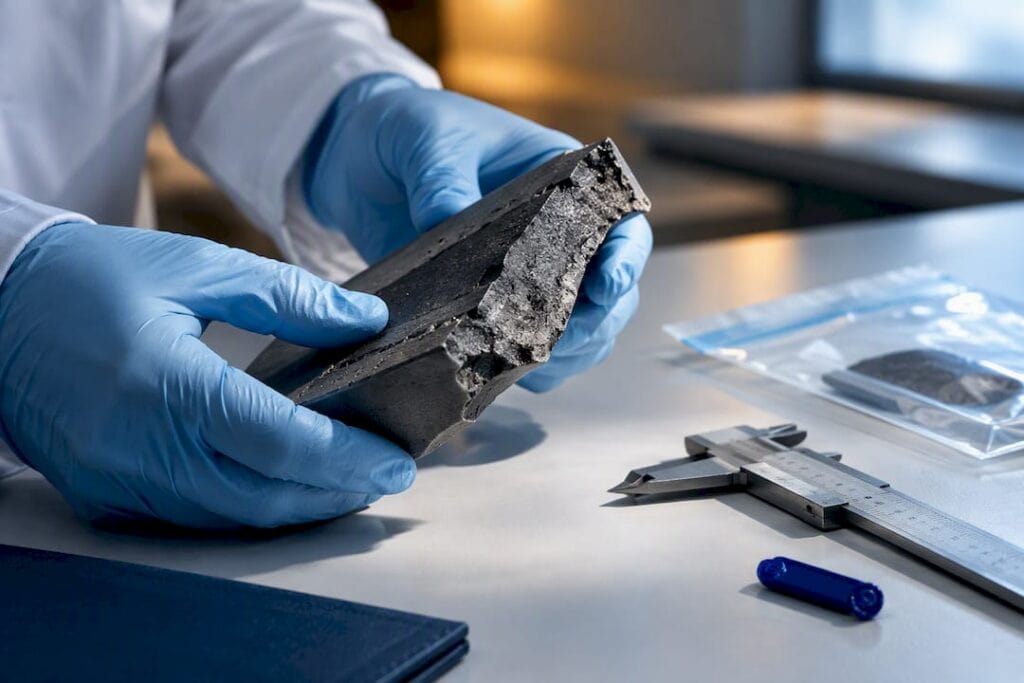
To prove a product defect claim, you need four things: a commercial seller supplied the product, you were actually injured, the product was defective when it left that seller’s control, and the defect directly caused your injury. The single most important action you can take right now, before anything else, is preserving the product exactly as it was when it failed.
TL;DR:
- Preserving the product in its original, unaltered state immediately after failure is critical, including taking detailed photographs and recording serial numbers.
- You must gather comprehensive medical records, incident reports, purchase proof, and detailed timelines linking the defect to your injury to establish causation.
- Expert testing, such as materials analysis and failure mode investigation, must follow strict chain-of-custody protocols to ensure evidence reliability.
- Filing a formal defect report with the manufacturer or seller requires precise documentation and legal guidance to avoid damaging your case.
- Acting promptly with legal counsel and understanding your state’s statute of limitations are essential to prevent evidence loss and preserve your right to sue.
Table of Contents
- How to Prove Product Defect: The Four Legal Elements
- What Kind of Defect Are You Dealing With?
- What to Do Right Now to Preserve Evidence
- Building Your Causation File: Medical and Documentary Evidence
- Testing, Exemplars, and Choosing the Right Experts
- Connecting the Dots: Building a Causation Narrative Courts Believe
- Why Spoliation Can Sink an Otherwise Strong Case
- How an Experienced Product Liability Attorney Strengthens Your Case
- Your Immediate Action Plan and Realistic Timeline
- Reporting the Defect to the Manufacturer or Seller
- Getting and Preserving Exemplar Products for Testing
- Statute of Limitations: How Long You Have to Act
- What I’ve Seen Go Wrong Most Often
- Talk to Keller & Keller Before You Do Anything Else With the Product
- Where to Verify These Legal Standards Yourself
- Sources
- FAQ
How to Prove Product Defect: The Four Legal Elements
Proving a product is defective starts with understanding what a court actually requires. Product liability law generally demands proof on four fronts, though the exact elements and available defenses vary by state, according to Cornell’s Legal Information Institute.
- Commercial seller: Save receipts, order confirmations, credit card statements, and packaging that identifies the retailer or manufacturer. A private seller at a garage sale creates a very different legal posture than a national retailer.
- Injury: Medical records, imaging, and contemporaneous treatment notes from the day of the incident carry far more weight than a note written weeks later from memory.
- Defect at the time of sale: Courts want evidence the flaw existed before you ever touched the product, not something that developed from years of ordinary wear.
- Causation: You must connect this specific defect to this specific injury. Manufacturers routinely argue misuse, unrelated preexisting conditions, or user error caused the harm instead, so anticipate that defense early. Our page on proving causation in a personal injury claim breaks down how attorneys draw that line.
What Kind of Defect Are You Dealing With?
Not every defective product fails the same way, and the proof you need shifts depending on which theory fits your case.
- Manufacturing defect: This particular unit deviated from its intended design. Proof usually comes from inspecting the failed item against an undamaged exemplar of the same model, and the defect must have existed when the product left the manufacturer’s control, per Cornell Law’s explanation of manufacturing defects.
- Design defect: The entire product line is unsafe. Plaintiffs typically need to show a feasible, safer alternative design existed, weighed against the risk-utility test Cornell Law describes.
- Marketing or failure-to-warn defect: The instructions or warnings were inadequate for a known risk. Evidence here includes the actual packaging language, the owner’s manual, and any marketing materials that downplayed a hazard the manufacturer already knew about.
What to Do Right Now to Preserve Evidence
Once you know which defect theory applies, the clock starts on preservation. Courts treat destroying or altering critical product evidence as spoliation, a mistake that can seriously damage an otherwise strong claim, according to Cornell Law.
- Do not repair, clean, return, or throw away the product, and keep every piece of original packaging, cords, batteries, and accessories together.
- Photograph the product exactly where the failure happened, capturing both close-up detail shots and wider context showing the surrounding scene.
- Save original photo and video files rather than edited screenshots, since metadata like timestamps often matters more than the image itself.
- Write down the serial number, lot number, purchase date, firmware or app version if relevant, and the name of every single person who has touched the product since the incident.
- Get contact information from any witnesses, request copies of surveillance footage before it gets overwritten, and obtain official incident reports from police, store management, or workplace safety officers.
Pro Tip: Store the product in a sealed container in a location only you or your attorney can access. A product that sat in a garage where family members or neighbors could have handled it creates a chain-of-custody gap that defense lawyers will exploit.
Building Your Causation File: Medical and Documentary Evidence
A causation file is the collection of records that ties the product failure to your specific injury, and it needs to be built methodically from day one. Complete medical records, diagnostic imaging, emergency room notes, itemized bills, and documented work-loss records form the backbone, according to Cornell Law’s guidance on products liability.
- Incident or accident reports filed at the time, plus any repair or maintenance records for the product itself.
- Original purchase receipts, warranty documents, and product registration confirmations.
- Photographs and video with metadata intact, along with a dated symptom diary you update as your recovery progresses.
- A chronological timeline that connects the exact moment of the product event to your first medical visit and every treatment session after it.
Organize everything in clearly named folders by date and category, and build a master index listing every document so your attorney can find what they need without digging. Our overview of proving elements in a missed diagnosis lawsuit shows how this same organizational approach applies whenever medical proof has to line up with a legal timeline.
Testing, Exemplars, and Choosing the Right Experts
Technical testing turns a suspicion into proof. Materials analysis, failure-mode testing, and side-by-side comparison against an undamaged exemplar of the same product can show exactly where and why a part failed.
- Design engineers evaluate whether the product met engineering standards for its category.
- Materials scientists identify metal fatigue, chemical breakdown, or manufacturing flaws at a microscopic level.
- Accident reconstructionists rebuild the sequence of events leading to the injury.
- Medical causation experts connect the mechanism of failure to the specific injury you sustained.
Any expert testimony offered in court must meet reliability standards under Federal Rule of Evidence 702 and the Daubert framework, meaning the expert’s methods have to be documented, tested, and generally accepted in their field.
Pro Tip: Never ship the only damaged unit to a lab or the manufacturer without a written chain-of-custody agreement first. Testing can consume or alter the very evidence you need, and an opposing expert will challenge results from an uncontrolled examination.
Connecting the Dots: Building a Causation Narrative Courts Believe
A persuasive causation case reads like a clear story, not a pile of documents. Build a timeline that runs from the product event straight through to symptom onset and the first medical visit, with no unexplained gaps a defense attorney could exploit.
- Gather evidence that rules out alternative explanations: normal wear and tear, obvious misuse, or a preexisting condition the defense will inevitably raise.
- Circumstantial evidence, such as a distinctive burn pattern or a malfunction that occurred during completely ordinary use, can sometimes carry a case even without a smoking-gun document.
Courts and experts focus on whether this specific unit caused your specific injury. Showing that a product category is generally risky isn’t enough on its own.
Why Spoliation Can Sink an Otherwise Strong Case
Once litigation becomes reasonably foreseeable, you have a legal duty to preserve relevant evidence, and Federal Rule of Civil Procedure 37(e) governs lost electronic evidence specifically. Courts have imposed real consequences on parties who lose or alter the product at issue.
- Sanctions range from adverse inference instructions, where the jury is told to assume the missing evidence hurt the responsible party, to outright exclusion of expert testimony or, in extreme cases, dismissal.
- One federal appeals court’s spoliation analysis in Flury v. Daimler Chrysler Corp. illustrates how losing the actual product can gut a plaintiff’s technical proof.
- A written preservation letter, a documented chain-of-custody log, and early coordination with counsel dramatically reduce this risk. Our discussion of spoliation inference in Indiana injury claims walks through how courts apply this doctrine in practice.
How an Experienced Product Liability Attorney Strengthens Your Case
Calling counsel early, before evidence disappears or gets altered, is often the single biggest factor separating a strong claim from a weak one.
- Attorneys send preservation letters to manufacturers and retailers, legally putting them on notice not to destroy relevant records or evidence.
- They establish chain-of-custody protocols before any lab or manufacturer examines the product.
- They retain qualified experts and coordinate testing so results hold up under Daubert scrutiny.
- Firm experience with cases like defective medical device litigation involving metal-on-metal hip implants shows how evidence preservation and expert testing come together in practice, and our look at warning signs of a defective product in a semi-truck accident applies the same evidence-first approach to commercial vehicle equipment failures.
Your Immediate Action Plan and Realistic Timeline
- Stop touching the product. Photograph it in place, record every serial and lot number, and secure your medical records within the first few days.
- Expect the investigation phase, expert retention, and lab testing to take weeks to months, especially where preservation agreements have to be negotiated with a manufacturer.
- Move from investigation to filing once your causation file is complete and at least one expert has confirmed the defect theory holds up.
Reporting the Defect to the Manufacturer or Seller
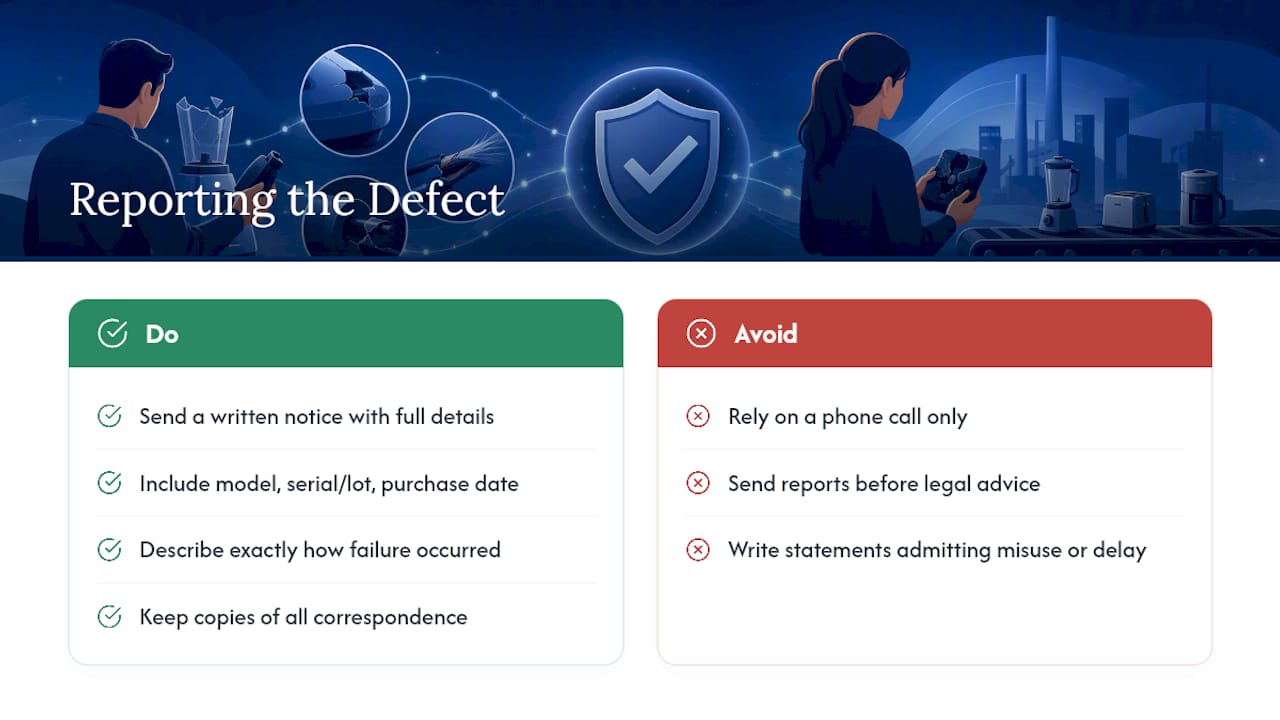
Documenting the defect for the manufacturer or seller is a separate step from building your legal case, and it needs to happen carefully. Send a written notice, not just a phone call, describing the product model, serial or lot number, purchase date, and exactly how the failure occurred. Keep a copy of everything you send and every response you receive.
Filing a report with the manufacturer, the retailer, and the Consumer Product Safety Commission creates a paper trail and can surface whether other consumers experienced the same failure. A recall listing or a pattern of similar CPSC complaints is a useful investigative lead, but it is not proof of your individual claim. You still have to establish that this exact unit was defective and that the defect caused your specific injury.
Before you send anything to the manufacturer, talk to an attorney. Once a company knows litigation is possible, its own communications become part of the record, and a poorly worded email from you can later be used to argue you misused the product or waited too long to report the problem. A short delay to get legal guidance costs you far less than a defect report that undermines your own case.
Getting and Preserving Exemplar Products for Testing
An exemplar is an undamaged unit of the same make, model, and, ideally, the same production run as the product that failed. Experts use it as a baseline to compare wear patterns, materials, and design against the item involved in your injury.
Buy or obtain the exemplar through a documented channel, such as a retail purchase with a saved receipt, rather than accepting a used unit from an untraceable source. Record the exemplar’s serial number, purchase date, and condition the moment you acquire it, and store it separately from the damaged product to avoid any argument that the two were mixed up or contaminated each other.
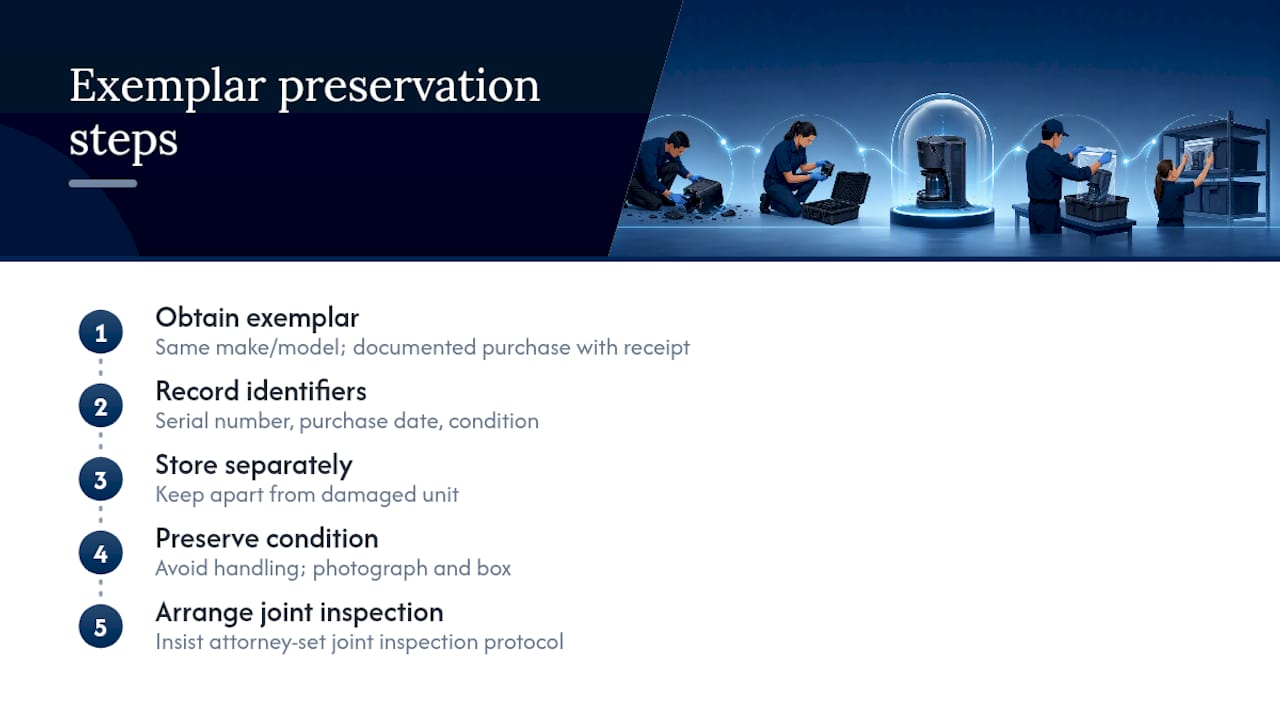
Never let the manufacturer or its representatives be the only party to examine either unit. Insist on a joint inspection protocol, ideally set up by your attorney, so both sides observe the same testing under agreed conditions. This protects the exemplar and the damaged product from claims of one-sided or unreliable testing later in litigation.
Statute of Limitations: How Long You Have to Act
Every state sets its own deadline for filing a product liability claim, and these deadlines, called statutes of limitations, typically run from the date of injury rather than the date of purchase. Miss that window and you generally lose the right to sue entirely, regardless of how strong your evidence is.
Some states also apply a separate statute of repose, which cuts off claims a fixed number of years after the product was manufactured or sold, even if you haven’t been injured yet or only just discovered the defect. These two clocks can run independently, and the interaction between them is one of the more common ways strong cases get filed too late.
Because these deadlines vary significantly by state and by claim type, don’t wait to find out your specific timeline. Evidence degrades, memories fade, and witnesses become harder to locate the longer you wait, even before the legal deadline actually expires.
What I’ve Seen Go Wrong Most Often
The single biggest mistake I see: people repair or discard the product before calling anyone. That one decision, made with good intentions, can quietly end a claim that otherwise had real strength.
— Adam
Talk to Keller & Keller Before You Do Anything Else With the Product
Some law firms work on a contingency-fee basis, meaning clients owe nothing unless compensation is recovered. This guarantee can provide reassurance at the start, when facing uncertainty about the cost of legal help. Initial calls are often free.

Before your free case evaluation, gather what you can: photos of the product and the scene, the serial or lot number, your purchase receipt or order confirmation, and any medical records or bills from treatment so far. If you’re missing something, don’t let that stop you from calling. Legal counsel can advise you on what needs to be preserved and how to obtain it before it’s gone. If your situation involves a family member’s death rather than your own injury, our page on wrongful death and survival claim deadlines explains how those timelines differ. Reach out to legal counsel promptly to help protect your evidence while there’s still time.
Where to Verify These Legal Standards Yourself
Cornell Law School’s Legal Information Institute publishes free, plain-language explanations of products liability, manufacturing defects, and design defects, all written by legal scholars. The CPSC’s reporting guidance explains federal reporting duties directly from the regulator that enforces them.
This article is general information, not a substitute for advice from a qualified lawyer. Consult a qualified legal professional about your own circumstances before acting on anything here.
Sources
- products liability | Wex | US Law | LII / Legal Information Institute
- manufacturing defect | Wex | US Law | LII / Legal Information Institute
- design defect | Wex | US Law | LII / Legal Information Institute
- Duty to Report to the CPSC: Your Rights and Responsibilities | U.S. Consumer Product Safety Commission
FAQ
What Is an Example of a Product Defect?
A power tool with a battery that overheats and catches fire during normal use, even though the user followed every instruction, is a classic manufacturing defect. A space heater sold without a tip-over shutoff switch, when safer designs already existed on the market, illustrates a design defect instead.
What Are the Four Elements You Must Prove in a Product Defect Case?
You must show a commercial seller supplied the product, you suffered an actual injury, the product was defective at the time it was sold, and the defect caused your specific injury, according to Cornell Law’s overview of products liability. Exact elements and defenses vary by state.
What Qualifies as a Defective Product Legally?
A product qualifies as legally defective when it has a manufacturing flaw, an unsafe design lacking a feasible safer alternative, or inadequate warnings about a known risk. It also must have been defective at the point it left the seller’s control, not damaged afterward through misuse or wear.
Can You Give an Example of a Defective Product Lawsuit?
Lawsuits over hip implants that failed due to metal-on-metal wear debris are a well-documented example, where plaintiffs had to show the device design caused tissue damage beyond normal wear. Our page on metal-on-metal hip replacement litigation covers how that evidence gets built in practice.
How Long Do I Have to File a Product Defect Claim?
The deadline depends entirely on your state’s statute of limitations, which usually starts running from the date of injury, and some states add a separate statute of repose tied to the manufacture date. Because these timelines vary and evidence degrades quickly, contact an attorney as soon as possible after the injury.